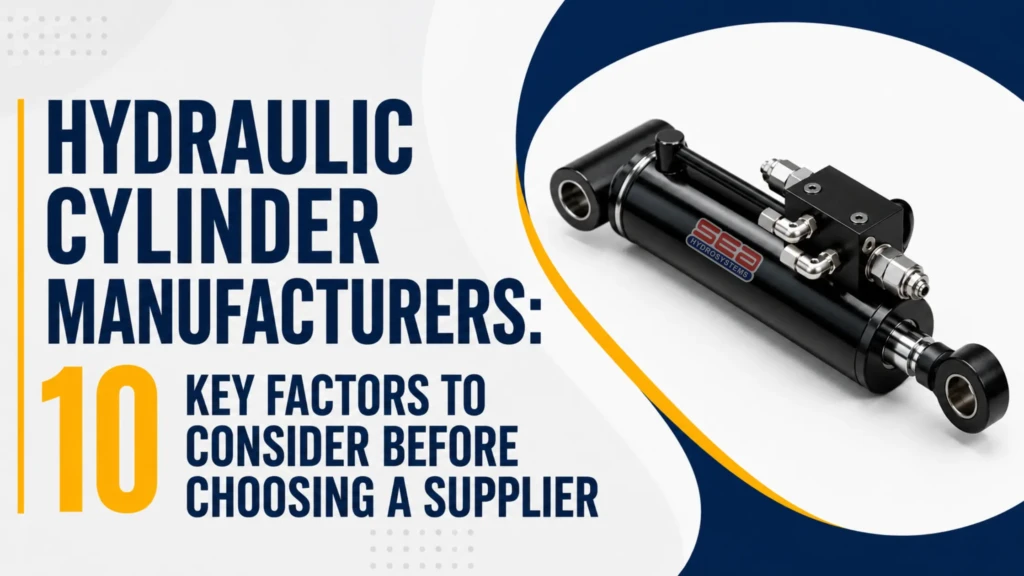
Choosing among different hydraulic cylinder manufacturers can be challenging, especially when equipment reliability, product quality, and project timelines are important. The right manufacturer should provide more than hydraulic components; they should offer engineering support, consistent quality, and reliable customer service.
At SEA Hydrosystems, we work with OEMs and industrial customers to provide hydraulic cylinder solutions for demanding applications. Here are 10 important factors to consider when selecting a hydraulic cylinder supplier.
1. Manufacturing Experience and Industry Track Record
Look for hydraulic cylinder manufacturers with experience serving your specific industry, whether it is construction, agriculture, marine, material handling, or industrial equipment.
Experience with similar applications can help reduce design issues, production challenges, and potential compatibility problems.
2. In-House Engineering Capabilities
A manufacturer with engineering capabilities can help evaluate application requirements, troubleshoot problems, recommend design improvements, and develop application-specific solutions.
This is particularly important when standard hydraulic cylinders cannot meet the required dimensions, mounting configuration, stroke, or operating conditions.
Engineering evaluation is also important when cylinder mounting, rod loading, or buckling requirements need to be considered. ISO/TS 13725:2021 provides a method for evaluating the buckling load of hydraulic cylinders, including considerations for mounting and possible off-axis loading.
3. Custom Design and Fabrication Options
Standard cylinders may not always fit specialized equipment requirements. Confirm that the manufacturer offers custom hydraulic cylinders for applications requiring non-standard bore sizes, stroke lengths, rod diameters, mounting configurations, or port locations.
SEA Hydrosystems provides custom hydraulic cylinder solutions for application-specific requirements.
For applications using standardized cylinder configurations, ISO 6020-1:2007 specifies metric mounting dimensions for medium-series single-rod cylinders at 16 MPa (160 bar), supporting interchangeability of commonly used hydraulic cylinders.
4. Quality Control and Testing Processes
A reliable manufacturer should have documented inspection and testing procedures appropriate for the cylinder design and application.
Ask about:
- Pressure or proof testing
- Leakage inspection
- Dimensional inspection
- Seal and weld inspection
- Material certification and traceability
- Functional testing where required
A structured quality-control process helps verify that cylinders meet specified design and performance requirements.
5. Material and Component Sourcing
Material and component selection can directly affect hydraulic cylinder durability and performance.
Ask manufacturers about the materials used for:
- Cylinder tubes
- Piston rods
- Pistons
- Bearings
- Seals
- Mounting components
For demanding applications, the manufacturer should be able to explain why particular materials, coatings, or sealing systems are suitable for the operating environment.
6. Production Capacity and Lead Times
Production delays can affect equipment manufacturing schedules and project deadlines.
Evaluate a manufacturer’s production capacity, typical lead times, ability to handle repeat orders, and capacity to support larger production requirements.
For OEM applications, it is also useful to understand how the manufacturer manages production planning and communicates potential schedule changes.
7. Certifications and Applicable Standards
Depending on the application and market, certain quality certifications or technical standards may be relevant.
Ask whether the manufacturer maintains certifications such as ISO 9001 and whether its manufacturing and testing processes follow applicable industry standards.
The appropriate standards can vary based on cylinder design, operating pressure, application, and market requirements. Confirm the relevant requirements with the manufacturer before finalizing the cylinder specification.
8. After-Sales Support and Repair Services
A dependable supplier should provide support after the cylinder has been delivered.
Ask about:
- Warranty terms
- Repair and rebuild services
- Replacement seals and components
- Technical support
- Troubleshooting assistance
- Spare-part availability
Good after-sales support can help reduce downtime and simplify future maintenance requirements.
9. Pricing Transparency and Overall Value
The lowest initial price does not always represent the best value.
Compare the overall cost of the hydraulic cylinder, including:
- Product quality
- Expected service life
- Maintenance requirements
- Replacement costs
- Lead times
- Technical support
- Warranty coverage
Considering total value rather than purchase price alone can help OEMs and industrial users make better supplier decisions.
10. Communication and Responsiveness
Clear communication is important throughout design, manufacturing, inspection, and delivery.
A responsive manufacturer should be able to provide clear information about specifications, production status, technical questions, and potential changes.
Communication during the initial evaluation can also provide an indication of the level of support you may receive after placing an order.
Red Flags to Watch for When Evaluating Manufacturers
Beyond the factors above, several warning signs may indicate that a supplier requires closer evaluation:
- Vague answers about testing or quality-control procedures
- Inability to explain material or component specifications
- No clear warranty or support policy
- Unclear or inconsistent lead times
- Limited engineering support
- Reluctance to discuss custom or non-standard requirements
These factors do not automatically mean a manufacturer is unsuitable, but they are reasons to request additional information before making a decision.
Questions to Ask During Supplier Evaluation
A short discussion with a manufacturer can reveal how well they understand your application and production requirements.
Consider asking:
- What industries do you primarily serve?
- Can you support custom cylinder designs?
- How do you handle design changes during production?
- What inspection and testing procedures do you use?
- Can you support both prototype quantities and production volumes?
- How do you handle quality issues after delivery?
- What technical and after-sales support do you provide?
Clear answers to these questions can help you compare hydraulic cylinder manufacturers more effectively.
Hydraulic Cylinder Standards and Design Considerations
Hydraulic cylinder requirements can vary depending on the application, pressure rating, cylinder construction, mounting arrangement, and intended operating environment.
Standardized mounting dimensions can be important when interchangeability or compatibility with existing equipment is required. ISO 6020-1:2007 covers metric mounting dimensions for medium-series single-rod cylinders rated at 16 MPa (160 bar).
For cylinders subject to compressive loads, rod diameter, mounting configuration, extension length, and potential off-axis loading should also be evaluated during the design process. ISO/TS 13725:2021 provides a method for evaluating hydraulic-cylinder buckling loads under these types of conditions.
Why OEMs and Industrial Teams Choose SEA Hydrosystems
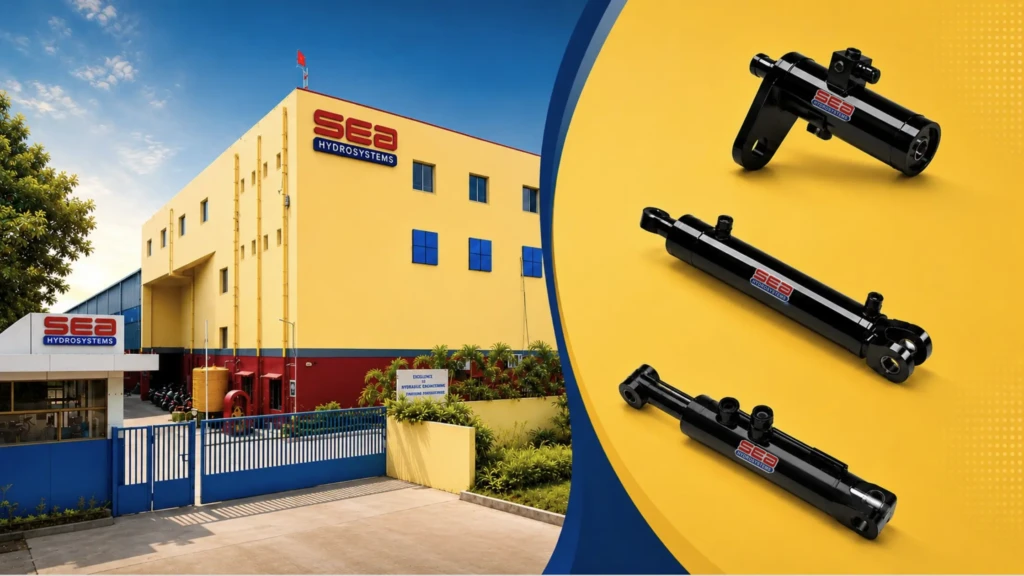
SEA Hydrosystems combines engineering support, manufacturing capabilities, and quality-control processes to provide hydraulic cylinder solutions for demanding industrial and mobile applications.
From standard designs to custom hydraulic cylinders, our team works with customers to understand application requirements and develop solutions based on factors such as cylinder dimensions, stroke, mounting configuration, operating conditions, and performance requirements.
Looking for a Reliable Hydraulic Cylinder Manufacturer?
If you are looking for a hydraulic cylinder manufacturer that can provide quality products, engineering support, and application-specific solutions, SEA Hydrosystems can help.
Our team can evaluate your requirements and support you from cylinder selection and design through manufacturing.
Contact our team to discuss your requirements