


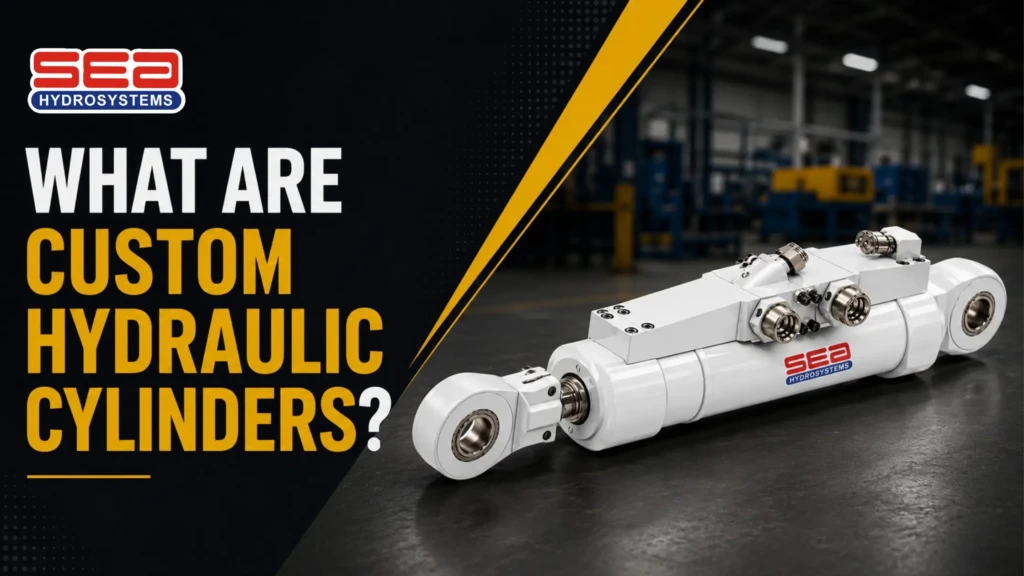
Standard hydraulic cylinders work well for many common applications, but specialized equipment often requires cylinders designed around specific dimensions and performance requirements. This is where custom hydraulic cylinders provide an advantage.
Custom cylinders can be engineered around load requirements, stroke length, mounting configurations, operating pressure, materials, sealing systems, and environmental conditions. Working with experienced custom hydraulic cylinder manufacturers allows OEMs and engineers to develop cylinders that match the specific requirements of their equipment.
Why Custom Hydraulic Cylinders Matter
Custom hydraulic cylinders are designed to meet application-specific requirements that standard catalog cylinders may not satisfy.
Benefits include:
- Precise fit for available installation space
● Optimized performance for specific load requirements
● Application-specific materials and sealing systems
● Flexible mounting and port configurations
● Better suitability for demanding operating environments
● Reduced risk of premature wear and equipment downtime
Custom cylinder design is particularly useful when equipment has unusual dimensions, specialized mounting requirements, demanding duty cycles, or challenging environmental conditions.
Common Applications for Custom Hydraulic Cylinders
Custom hydraulic cylinders are used across a wide range of industries and equipment applications.
Common applications include:
- Construction and earthmoving equipment
● Agricultural and farming machinery
● Marine and offshore equipment
● Material handling and lifting equipment
● Steel mills and heavy industrial machinery
● Specialized mobile equipment
Each application has different requirements for force, stroke, mounting, speed, temperature, and environmental exposure. Custom engineering allows these requirements to be considered during cylinder selection and design.
Hydraulic Cylinder Design Options
There are several hydraulic cylinder design options that can be customized according to the application’s mechanical and operating requirements.
1. Bore and Rod Size
Bore diameter affects the force generated by the cylinder at a given hydraulic pressure, while rod diameter contributes to mechanical strength and resistance to bending and buckling.
Selecting the appropriate bore and rod size helps balance force, speed, durability, and available installation space.
2. Stroke Length
Stroke length determines the distance the cylinder can extend and retract.
Custom stroke lengths are useful when standard cylinder dimensions do not match the required machine movement or available installation space.
3. Mounting Configuration
Mounting configuration determines how the cylinder connects to the equipment and how forces are transferred through the assembly.
Common mounting options include:
- Clevis mounts
● Trunnion mounts
● Flange mounts
● Foot mounts
● Tie-rod mounting configurations
Proper mounting and alignment help minimize unwanted side loading and support reliable cylinder operation.
4. Seal Systems
Seal selection should consider hydraulic fluid compatibility, operating temperature, pressure, speed, and contamination conditions.
Application-specific seal systems can help control leakage and reduce premature seal wear.
5. Rod Materials and Surface Protection
Piston rod material and surface treatment can be selected according to the operating environment and required performance.
Surface protection may be considered for applications exposed to moisture, chemicals, abrasive materials, or corrosive conditions.
6. Cushioning
Cushioning helps control piston movement as the cylinder approaches the end of its stroke.
It can be particularly useful in applications involving high operating speeds, heavy loads, or frequent cycling by helping reduce impact and vibration.
7. Port Location and Fittings
Port location, port size, thread type, and fitting configuration can be customized according to equipment requirements.
Proper port placement can simplify hydraulic connections and reduce hose-routing complexity.
8. Special Configurations and Accessories
Depending on the application, cylinders can also be designed with specialized configurations, position sensors, or other accessories.
These options can help equipment manufacturers integrate cylinder operation with specific machine requirements and control systems.
For additional technical information about hydraulic cylinder dimensions and bearing-ring housing requirements, refer to the ISO 10766 hydraulic cylinder standard.
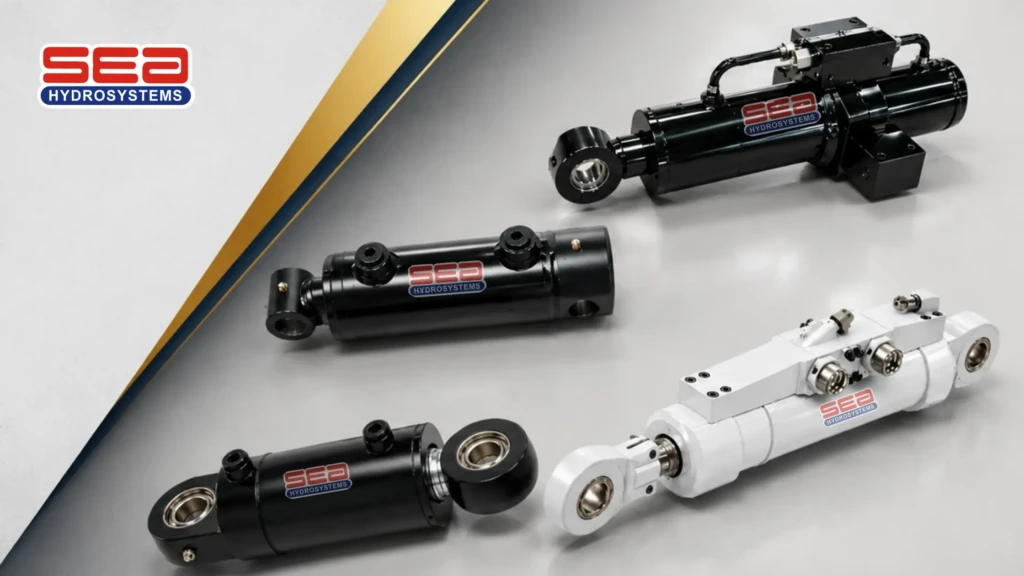
Materials Used in Custom Hydraulic Cylinder Manufacturing
Material selection has a direct impact on cylinder strength, durability, and suitability for different operating environments.
Common material considerations include:
- Carbon steel for general-purpose applications
● Alloy steel for demanding mechanical loads
● Stainless steel for applications requiring greater corrosion resistance
● Chrome-plated rods for improved surface wear and corrosion resistance
● Bronze or composite bearing materials for suitable friction and wear performance
The cylinder tube, piston rod, piston, gland, bearings, and seals should be selected according to the complete application requirements.
Testing and Quality Control for Custom Hydraulic Cylinders
Custom hydraulic cylinders should undergo appropriate inspection and testing before being supplied for equipment installation.
Quality checks may include:
- Dimensional inspection
● Pressure or proof testing
● Leakage inspection
● Weld inspection
● Surface and coating inspection
● Functional testing
● Cycle testing where required
The specific testing requirements should be determined according to the cylinder design, operating conditions, customer specifications, and applicable standards.
For additional information about hydraulic systems, fluid power principles, and hydraulic components, refer to the U.S. Navy Fluid Power Training Course.
How to Choose Custom Hydraulic Cylinder Manufacturers
Selecting experienced custom hydraulic cylinder manufacturers is important for developing a reliable cylinder solution.
Look for a manufacturer that provides:
- Engineering and application support
● Custom cylinder design capabilities
● Prototype and production support
● Material and seal selection assistance
● Testing and inspection capabilities
● Experience with your specific industry
● Consistent manufacturing processes
● Reliable production and delivery support
Provide the manufacturer with complete application information, including load, stroke, operating pressure, speed, mounting dimensions, duty cycle, hydraulic fluid, temperature range, and environmental conditions.
A complete application specification helps the manufacturer determine the appropriate cylinder configuration and design requirements.
Design Features That Support Custom Cylinder Performance
Well-designed custom hydraulic cylinders can incorporate features that improve suitability for specific applications.
These may include:
- Application-specific sealing systems
● Hardened or protected piston rods
● Precision-machined cylinder bores
● Corrosion-resistant surface protection
● Heavy-duty mounting configurations
● Custom cushioning arrangements
● Application-specific port configurations
Selecting the right combination of features helps ensure the cylinder is properly matched to the equipment’s operating conditions.
Custom Hydraulic Cylinders From SEA Hydrosystems
SEA Hydrosystems designs and manufactures custom hydraulic cylinders for industrial and mobile equipment applications.
Our engineering team works with customers to understand application requirements and develop cylinders based on factors such as bore, rod diameter, stroke, mounting configuration, operating pressure, materials, and environmental conditions.
Whether you require a replacement cylinder, modified design, or completely custom hydraulic cylinder, SEA Hydrosystems can support your requirements from design through manufacturing.
Explore our custom hydraulic cylinder solutions to learn more about our capabilities.
When Should You Choose a Custom Hydraulic Cylinder?
A custom hydraulic cylinder may be appropriate when a standard cylinder cannot meet the requirements of the equipment.
Consider a custom cylinder when:
- A specific installation dimension is required
● A non-standard stroke length is needed
● The equipment requires a unique mounting configuration
● Special seals or materials are required
● The cylinder operates in a corrosive or contaminated environment
● Specific port locations are required
● The application involves demanding loads or duty cycles
● An OEM requires a cylinder designed specifically for its equipment
Custom cylinder design provides greater flexibility when standard off-the-shelf cylinders cannot satisfy the technical requirements of an application.
Need Reliable Custom Hydraulic Cylinder Solutions?
If your equipment requires a hydraulic cylinder designed around specific performance, dimensional, or environmental requirements, SEA Hydrosystems can help.
Our team can work with you to evaluate your application requirements and develop a suitable custom hydraulic cylinder solution.
Contact our team to discuss your requirements

