


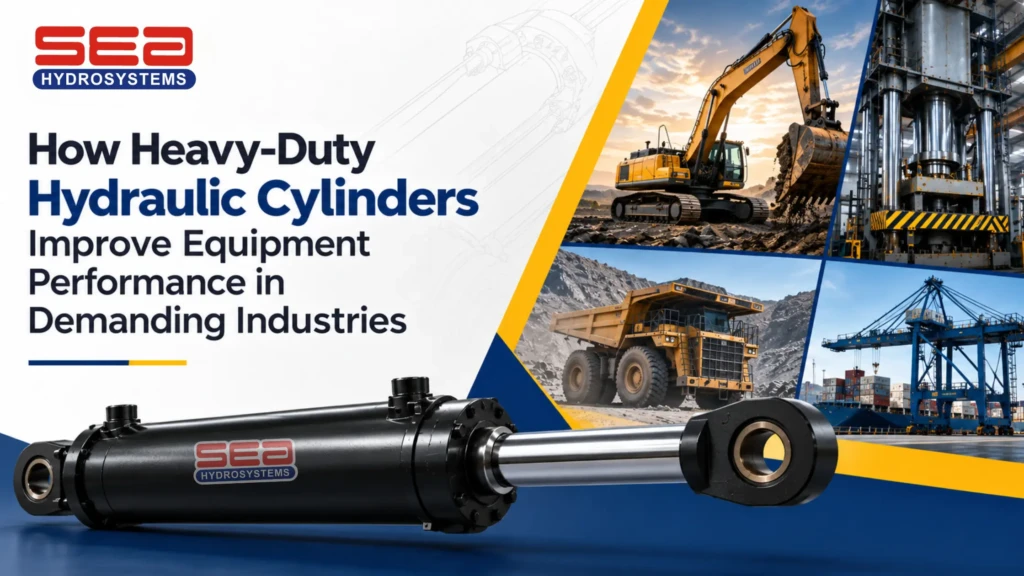
Equipment operating under high loads, frequent cycles, and harsh environmental conditions requires hydraulic components designed for demanding service. A heavy duty hydraulic cylinder is engineered around factors such as load capacity, operating pressure, stroke, duty cycle, mounting configuration, and environmental conditions.
Unlike general-purpose cylinders, heavy-duty hydraulic cylinders can be configured with suitable materials, sealing systems, rod protection, and mounting arrangements to support reliable operation in demanding applications.
At SEA Hydrosystems, we manufacture hydraulic cylinders for industrial and mobile equipment where durability, reliability, and consistent performance are important.
What Makes a Hydraulic Cylinder Heavy-Duty?
A heavy duty hydraulic cylinder is designed to withstand the mechanical and operating demands of a specific application. Its construction and components are selected according to pressure, load, stroke, speed, duty cycle, and environmental conditions.
Depending on the application, heavy duty hydraulic cylinders may incorporate:
- Heavy-wall cylinder barrels
- Hardened or chrome-plated piston rods
- Application-specific sealing systems
- Reinforced mounting configurations
- Suitable bearings and guiding components
- Protective surface treatments
The correct design depends on the equipment requirements rather than simply making every component larger or heavier.
How Heavy-Duty Cylinders Improve Equipment Performance
A properly specified industrial hydraulic cylinder can directly affect the performance and reliability of the equipment in which it operates.
Performance improvements can include:
- Reliable force generation for lifting and pushing operations
- Better durability during frequent cycling
- Improved resistance to wear and contamination
- More consistent operation under demanding loads
- Reduced risk of premature component failure
When an industrial hydraulic cylinder is correctly sized and matched to the hydraulic system, it can help equipment operate more consistently and efficiently.
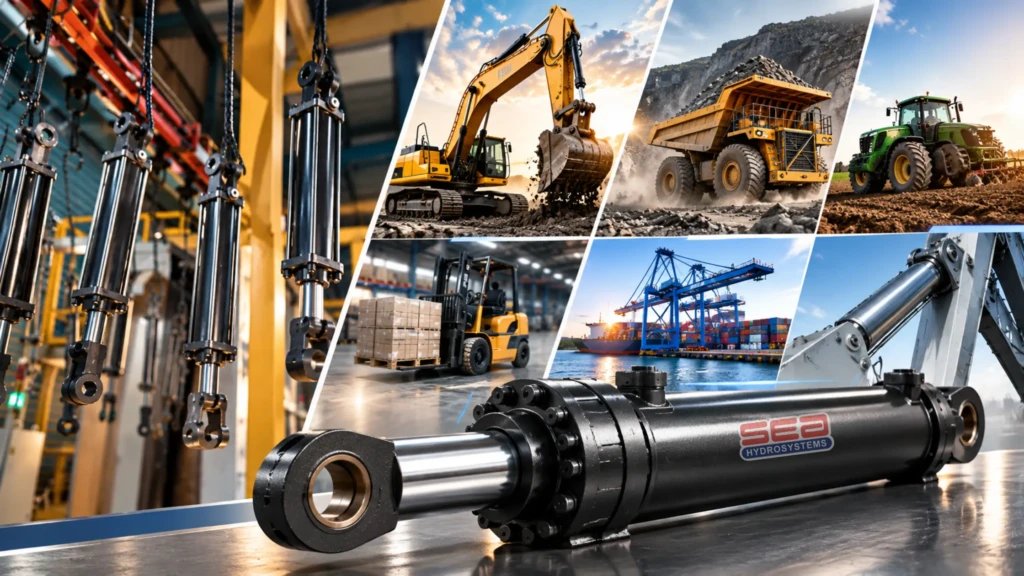
Industries That Use Heavy-Duty Hydraulic Cylinders
Construction and Earthmoving
Construction equipment such as excavators, loaders, cranes, and lifting machinery operates under high mechanical loads and frequent cycles.
Heavy duty hydraulic cylinders are commonly used for boom, arm, bucket, steering, lifting, and other machine functions where reliable hydraulic force is required.
Steel and Metal Processing
Steel and metal-processing equipment can expose hydraulic components to heavy loads, high cycle rates, elevated temperatures, and demanding working environments.
An appropriately designed industrial hydraulic cylinder can support lifting, positioning, pressing, and material-handling operations in these applications.
Marine and Offshore
Marine equipment may operate in environments with moisture, saltwater, and corrosive exposure.
A heavy duty hydraulic cylinder for marine applications can be specified with suitable materials, seals, coatings, and corrosion protection based on the operating environment.
Mining and Aggregate Processing
Mining and aggregate equipment can expose cylinders to heavy loads, vibration, dust, abrasive materials, and shock loading.
Properly designed heavy duty hydraulic cylinders can be used in equipment where durability and resistance to harsh operating conditions are important.
Key Performance Benefits
Selecting the right cylinder configuration can provide several performance benefits for demanding equipment.
A suitable heavy duty hydraulic cylinder can provide:
- High force capability for demanding applications
- Reliable operation during frequent cycles
- Improved resistance to rod and seal wear
- Better suitability for harsh environments
- Support for longer maintenance intervals when properly specified
The actual performance of an industrial hydraulic cylinder depends on correct sizing, hydraulic-system conditions, mechanical loading, installation, and maintenance.
Design Factors That Affect Cylinder Performance
Several factors should be evaluated when selecting a cylinder for demanding equipment.
Operating Pressure
The cylinder should be designed for the required working pressure and applicable safety requirements.
Pressure affects component selection, including the cylinder tube, piston, rod, seals, and other pressure-containing parts.
Bore and Rod Diameter
Bore diameter affects the force produced by the cylinder at a given hydraulic pressure, while rod diameter contributes to mechanical strength and stability.
Correct sizing helps balance force requirements, cylinder dimensions, speed, and mechanical loading.
Stroke Length
Stroke determines the distance the cylinder can extend and retract.
The required stroke should match the equipment’s actual movement while considering available installation space and mounting geometry.
Duty Cycle
A cylinder operating continuously or at high cycle rates may require different component specifications than one used intermittently.
Cycle frequency, operating speed, load, temperature, and expected service conditions should be considered when designing a heavy duty hydraulic cylinder.
Mounting and Alignment
Correct mounting and alignment are essential for reliable cylinder operation.
Misalignment and excessive side loading can increase wear on rods, seals, bearings, and mounting components.
For additional guidance on hydraulic cylinder selection and performance factors, see this technical resource from Machine Design. Hydraulic cylinder selection and performance factors
Signs Your Equipment May Need a Heavy-Duty Cylinder
Recurring hydraulic-cylinder problems may indicate that the existing cylinder is not properly matched to the application.
Common signs include:
- Frequent seal failures or hydraulic leaks
- Visible rod scoring, corrosion, or bending
- Premature bearing or mounting wear
- Reduced or inconsistent cylinder performance
- Repeated downtime despite regular maintenance
- Cylinder damage after heavy loading or shock events
These problems can have several causes, including incorrect sizing, contamination, misalignment, excessive side loading, or unsuitable operating conditions.
Before upgrading to heavy duty hydraulic cylinders, the complete application should be evaluated to identify the actual cause of the failure.
Choosing the Right Hydraulic Cylinder
Selecting an industrial hydraulic cylinder requires more than comparing bore diameter and price.
Consider the following factors:
- Required cylinder force
- Operating pressure
- Bore and rod diameter
- Stroke length
- Operating speed
- Duty cycle
- Mounting configuration
- Hydraulic fluid
- Temperature range
- Environmental conditions
- Maintenance requirements
Providing complete application information helps the manufacturer determine the appropriate cylinder configuration.
Why Custom Hydraulic Cylinders Can Improve Performance
Standard cylinders may not always meet the dimensional, load, mounting, or environmental requirements of specialized equipment.
Custom hydraulic cylinders can be designed around application-specific requirements such as:
- Bore and rod dimensions
- Stroke length
- Mounting configuration
- Sealing system
- Rod surface protection
- Port location
- Operating pressure
- Environmental conditions
For equipment with specialized requirements, custom design can help ensure the cylinder is properly matched to the machine.
Explore our custom hydraulic cylinder solutions for demanding industrial and mobile equipment applications.
Quality and Testing Considerations
Quality control is important when manufacturing cylinders for demanding applications.
Depending on the cylinder design and customer requirements, inspection and testing may include:
- Dimensional inspection
- Pressure or proof testing
- Leakage inspection
- Weld inspection
- Surface and coating inspection
- Functional testing
- Cycle testing where required
An industrial hydraulic cylinder should be inspected according to its design specifications, operating conditions, and applicable requirements before being supplied for equipment installation.
Maintenance of Heavy-Duty Hydraulic Cylinders
Regular maintenance can help identify developing problems before they result in equipment downtime.
Maintenance checks should include:
- Inspecting piston rods for scoring, corrosion, and damage
- Checking seals for leakage
- Inspecting mounting points and pins
- Monitoring hydraulic fluid condition
- Checking hoses and fittings
- Monitoring unusual noise, vibration, or cylinder movement
Proper sealing and protection against external contamination are important for cylinder reliability and maintenance. For additional information, see this resource on hydraulic cylinder maintenance and seal design.
Why Choose SEA Hydrosystems?
SEA Hydrosystems designs and manufactures hydraulic cylinders for demanding industrial and mobile equipment applications.
Our engineering team works with customers to understand requirements such as load, stroke, operating pressure, mounting configuration, duty cycle, and environmental conditions.
From standard designs to custom solutions, our team can develop an industrial hydraulic cylinder based on the specific requirements of the equipment and application.
Need a Heavy-Duty Hydraulic Cylinder for Your Equipment?
If your equipment operates under demanding loads, frequent cycles, or challenging environmental conditions, SEA Hydrosystems can help you select a suitable hydraulic cylinder solution.
Our team can evaluate your application requirements and develop a heavy duty hydraulic cylinder based on your equipment’s performance, dimensional, and operating requirements.
Contact our team to discuss your requirements

