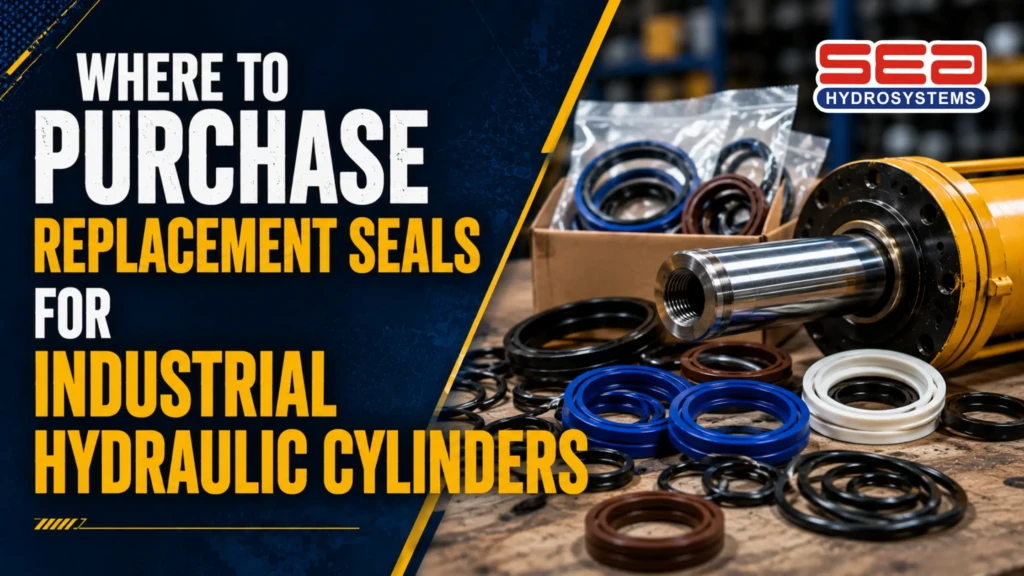
Seal replacement is one of the most common maintenance activities for industrial hydraulic cylinders. Whether it is part of scheduled maintenance or an urgent repair to fix a developing leak, selecting the correct seals – in the right material and dimensions – is critical to restoring full cylinder performance.
Using incorrect or low-quality seals can significantly reduce service life and lead to repeated failures.
At SEA HydroSystems, we supply cylinders with high-performance sealing systems and provide expert guidance on seal kit specifications for both our cylinders and third-party designs.
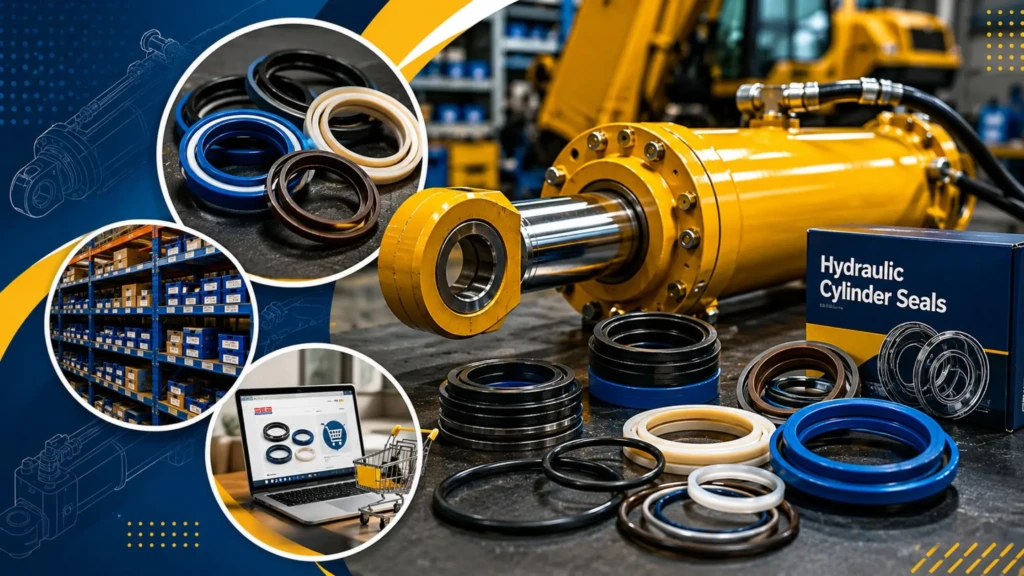
Understanding Hydraulic Cylinder Seal Types
Rod Seals
The primary dynamic seal that prevents hydraulic fluid from leaking along the piston rod. It operates under full system pressure and continuous motion, making it the most frequently replaced seal. Learn more about hydraulic cylinder seal types.
Piston Seals
Prevents internal fluid bypass across the piston. A worn piston seal results in cylinder drift and reduced load-holding capability.
Wiper Seals (Dust Seals)
Located at the outer end of the cylinder head, these seals remove dirt, dust, and moisture from the rod during retraction. Always replace together with rod seals.
Static Seals (O-rings & Backup Rings)
Used in non-moving joints such as:
- Cylinder head to barrel
- Port fittings
- Piston-to-rod connections
These seals may degrade due to heat, pressure, or aging. Read more about O-ring sealing principles.
Buffer Seals
Used in high-pressure or high-cycle applications to protect the primary rod seal from pressure spikes. Common in heavy-duty industrial and mobile equipment.
Common Seal Materials and Their Applications
- Nitrile (NBR): Standard for mineral oil systems; temperature range −30°C to +100°C
- Polyurethane (PU/PUR): Excellent wear resistance; ideal for heavy-duty dynamic applications (−30°C to +110°C)
- PTFE: Low friction and high chemical resistance; suitable for high-temperature environments
- Fluorocarbon (FKM/Viton): Excellent for high heat and aggressive fluids
How to Identify the Correct Replacement Seals
Correct seal selection requires:
- Cylinder dimensions: bore diameter, rod diameter, and groove dimensions
- Hydraulic fluid type: compatibility is critical
- Operating temperature range: seals must withstand full working conditions
If original specifications are unavailable, disassemble the cylinder and measure seal grooves accurately.
Where to Source Replacement Seals
Direct from the Cylinder Manufacturer
The most reliable option. Manufacturers maintain exact seal specifications and supply complete seal kits covering all required components.
SEA Hydrosystems provides seal kits for cylinders manufactured in our facility.
Industrial Seal Distributors
Offer a wide range of standard seals in various materials and sizes. Suitable when OEM sourcing is unavailable.
Local Hydraulic Service Providers
Ideal for urgent repairs. Many local suppliers stock common seal sizes or can fabricate custom seals when needed.
Online Industrial Suppliers
Provide convenient sourcing, but accuracy is critical. Always confirm:
- Seal profile
- Material specification
- Exact dimensions
Avoiding Common Seal Sourcing Mistakes
- Do not substitute seal materials without verifying compatibility
- Do not reuse seals removed during disassembly
- Avoid improperly stored seals (exposure to heat, light, or ozone)
- Always replace wiper seals along with rod seals
Need Hydraulic Cylinder Seal Support?
SEA HydroSystems provides expert guidance on seal selection and supplies high-quality seal kits for both standard and custom hydraulic cylinders.
Contact us for technical support or replacement solutions
sales@seahydrosys.com