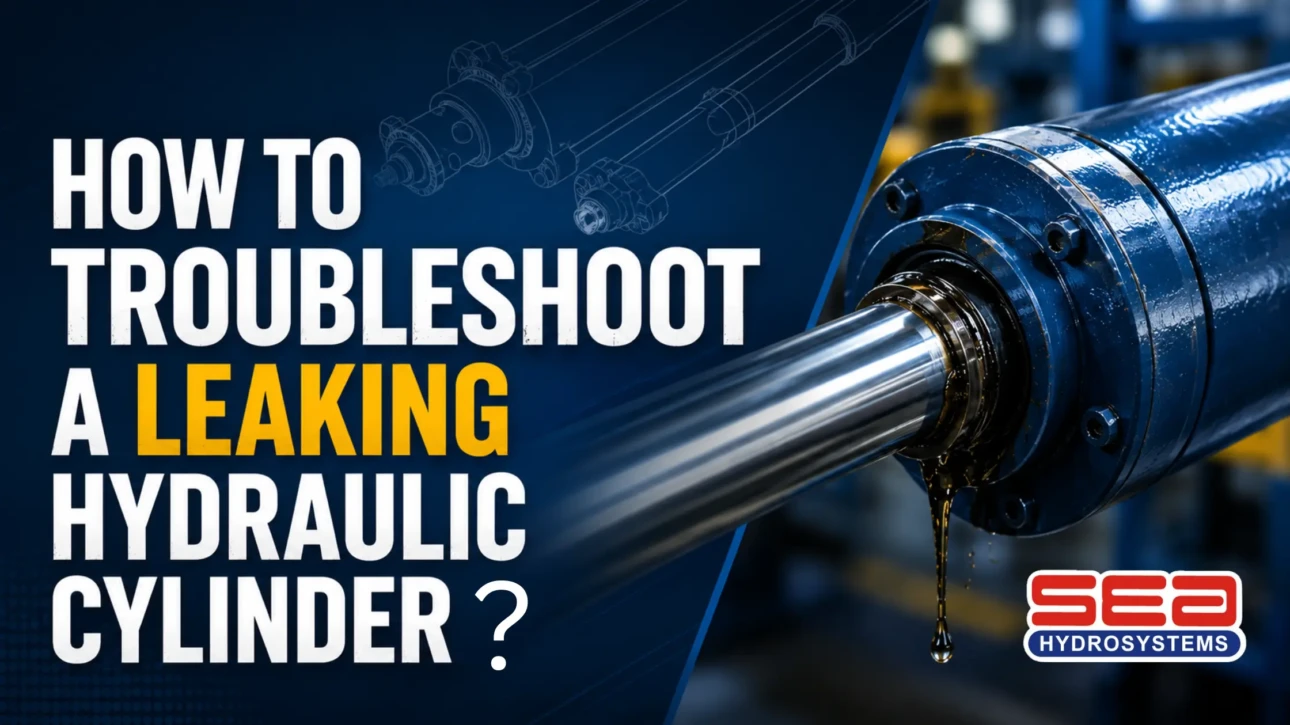
 How to Troubleshoot a Leaking Hydraulic Cylinder
A leaking hydraulic cylinder is one of the most common service issues in industrial and mobile equipment. Left unaddressed, even a minor leak can accelerate seal wear, contaminate hydraulic fluid, reduce system efficiency, and ultimately lead to complete cylinder failure.
Understanding how to quickly diagnose and resolve hydraulic cylinder leaks can significantly reduce downtime and prevent costly secondary damage to the hydraulic system.
At SEA HydroSystems, we engineer cylinders with high-performance sealing systems designed to minimize leak risks. However, when issues arise, this guide will help you troubleshoot effectively.
Types of Hydraulic Cylinder Leaks
External Leaks
External leaks are visible and occur when fluid escapes outside the cylinder. Common locations include:
- Rod seal area – fluid leaking around the piston rod where it exits the cylinder head
- Port connections – leakage at hydraulic hose or fitting connections
- End cap welds or seams – especially in welded cylinders with compromised welds
- Barrel surface – rare, but possible in damaged or corroded cylinders
Internal Leaks (Bypass Leaks)
Internal leaks occur when fluid bypasses the piston seal without visible external leakage. These are identified by:
- Cylinder drifting or losing position under load
- Reduced lifting or pushing force
- Increased cycle time
- No visible oil leakage
 Step-by-Step Troubleshooting Process
Step 1: Identify the Leak Location
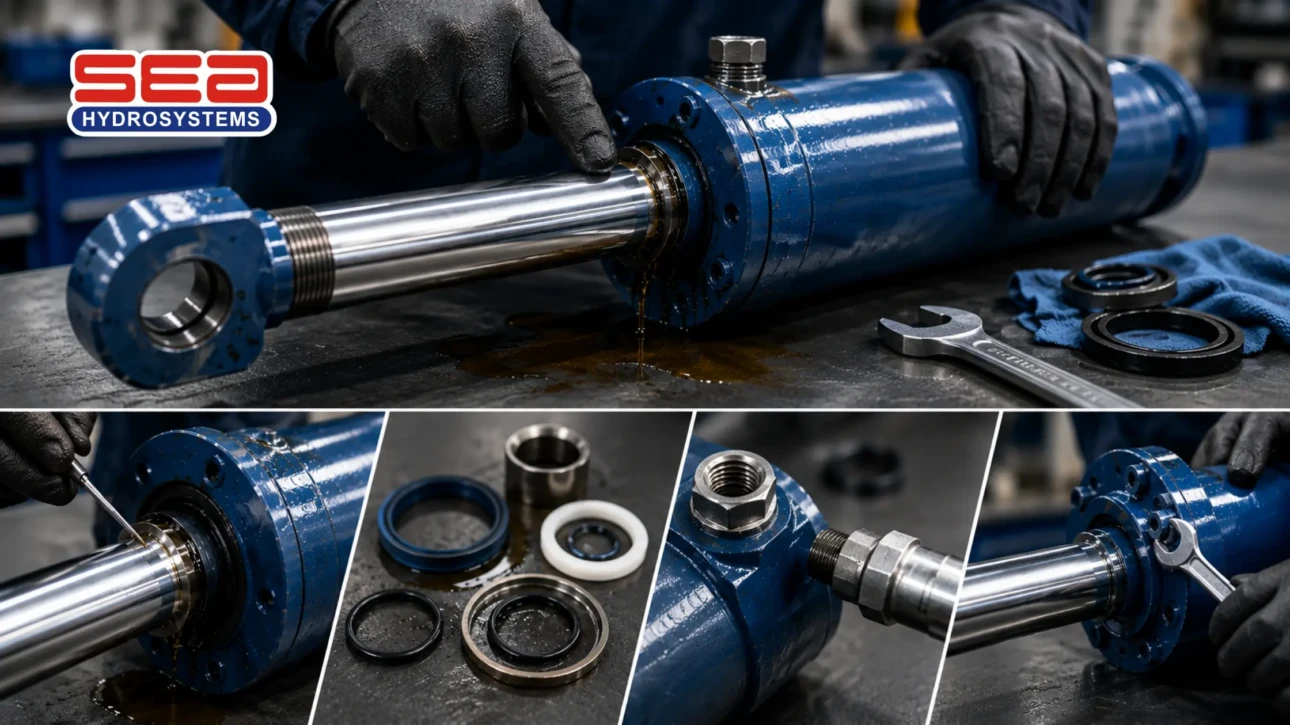
Clean the cylinder thoroughly using a degreaser. Operate the system under load and observe carefully. Use a clean white cloth or paper near suspected areas to detect leakage. This helps pinpoint the exact leak source.
Step 2: Inspect the Piston Rod
The piston rod is the primary sealing surface. Inspect for:
- Scratches, scoring, or pitting
- Corrosion due to moisture or chemicals
- Bent or misaligned rod
- Chrome plating wear or peeling
A damaged rod will continue to damage new seals unless repaired or replaced. Hard chrome re-plating may be required.
Step 3: Check the Rod Seal and Wiper Seal
- The rod seal prevents fluid leakage
- The wiper seal prevents external contaminants from entering
If seals are worn, cracked, hardened, or extruded, replace both together. Always select seal materials compatible with your hydraulic fluid and operating temperature.
Step 4: Test for Internal Bypass
Extend the cylinder fully under pressure. Disconnect the pressure line from the extend port and monitor the opposite port.
If fluid flows under load, the piston seal is bypassing internally. The cylinder must be disassembled and seals replaced.
Step 5: Inspect End Caps and Port Fittings
Check all fittings for:
- Proper thread engagement
- Seal condition
- Correct torque (avoid over-tightening)
For welded cylinders, inspect weld joints for cracks or defects.
Step 6: Review Operating Conditions
- Ensure system pressure is within rated limits
- Check relief valve settings
- Inspect for misalignment or side loading
Side loading significantly reduces seal life and damages the rod.
Hydraulic Cylinder Design Features That Prevent Leaks
Well-designed cylinders reduce the risk of leakage through:
1. High-Performance Sealing Systems
PU and PTFE seals provide superior leak resistance and durability in demanding environments.
2. Hardened Chrome-Plated Rods
Improves wear resistance and protects sealing surfaces.
3. Precision Bore Finishing
Ensures proper piston seal contact and reduces internal leakage.
4. Leak-Proof Port Design
High-quality port design prevents leakage under pressure fluctuations.
Preventing Future Leaks
- Use the correct hydraulic fluid and maintain cleanliness
- Replace seals proactively, not just after failure
- Protect piston rods from physical damage
- Ensure proper installation and alignment
- Follow manufacturer pressure and temperature guidelines
Searching for Reliable Hydraulic Cylinder Solutions?
Partner with SEA HydroSystems for high-performance hydraulic cylinders designed to meet demanding industrial applications.
Request a custom quote or share your specifications today
sales@seahydrosys.com